Kubotan Keychain for Women: What It Is, How It Works, and Whether to Carry One

A kubotan keychain for women looks like nothing much. A short, hard stick, about the length of your palm, hanging on a key ring next to your house keys. No batteries, no spray, no alarm. It does not look like a self-defence tool at all, and that is most of the point.
But a plain-looking kubotan keychain for women still needs an honest explanation. A kubotan only helps if you can reach it fast, hold it right, and get away after using it. This guide covers what it is, how it works, how it compares with the cat ear keychain you have probably also seen, and what to check before you carry either one.
What a Kubotan Actually Is
A kubotan is a small, rigid rod, usually around five to six inches long and about as thick as a marker pen, with a key ring at one end. It was developed in the 1970s by Japanese martial artist Takayuki Kubota, first as a control tool for police officers, and it later spread to civilian self-defence. The original was a hard plastic rod with grooves along its body. Today you will find them in metal, hard resin, and tough plastic, in plain rods and in versions with a pointed tip.
To understand what a kubotan is, forget the idea of a weapon you swing. A kubotan is a force multiplier. It takes the strength you already have in your hand and concentrates it into a much smaller area. Pressed into a pressure point or the back of a hand, the same grip that would barely bother someone suddenly hurts enough to make them let go. That is the whole job: it buys you a second to get away.
It is not magic, and it is not a guarantee. A kubotan does not stop someone on its own. It creates a moment — a broken grip, a flinch, a step back — and what you do with that moment matters more than the tool itself. Run. Get somewhere with people. Call for help. The tool is the beginning of an escape, never the plan on its own.
How to Hold One
There are two basic grips, and they do two different jobs.
The hammer grip is the striking grip. You close your fist around the rod with one end sticking out below your little finger, like holding a hammer. A downward or forward swing then lands with the end of the rod instead of your knuckles. This is the grip for striking a hand that is grabbing you, or the top of a foot, a shin, or a forearm.
The icepick grip is the pressure grip. The rod sits in your fist with the tip sticking out past your thumb, pointing forward. Instead of swinging, you press. Pressed into a nerve cluster on the forearm or the back of a hand, it can make a grip open up fast. It also reinforces a palm-heel strike, because your fist is holding something solid instead of squeezing empty air.
Neither grip is complicated, but neither is automatic either. The grip that feels natural when you are calm in your kitchen is not the grip your hand finds when you are scared and in a hurry. That is why a few hours of practice matter more than any advanced technique. Hold your keys the way you would on a dark walk, find the grip by feel without looking down, and repeat it until your hand knows where the rod is. A local self-defence class can show you both grips properly in one session, and that is worth more than a dozen videos.
Kubotan or Cat Ear Keychain: Which One Fits You
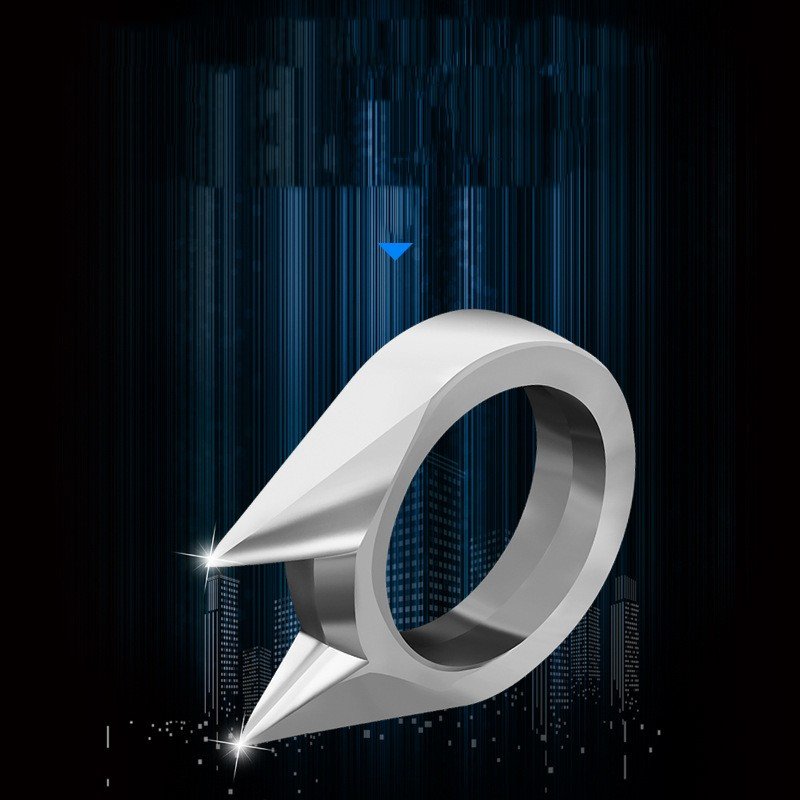
The other keychain tool you will see everywhere is the cat ear keychain — a small plastic shape with two pointed ears, worn on your fingers like a ring. It works on the same idea as a kubotan: concentrate force into a small point. The difference is in the hand.
A kubotan fills your whole fist. It braces your grip, and you can use it for strikes and pressure in two directions. It is the more versatile of the two, and the one a self-defence instructor is most likely to teach with.
A cat ear keychain is lighter and flatter, and it sits on two fingers. It is easier to carry unnoticed and faster to slip on, but it does less. It gives you pointed pressure in one direction, and it does not brace your fist the way a rod does. Some women prefer it precisely because it is so small — it is the tool you will actually have on your keys every day, and a tool you carry beats a tool you leave at home.
If you are choosing between them, think about your hand and your routine, not about which one looks tougher. Small hands often suit a slim kubotan better than a chunky one. If you hate bulk on your keys, the cat ear shape wins. If you want one tool that can do more than one job, the kubotan wins. Either way, buy a blunt, plain version first. Pointed or spiked tips are restricted in more places, and they change what the tool is in the eyes of the law.
Carrying It Every Day
A kubotan only works if it is on the keys you actually use. Clip it to your main key ring, not to a spare set in a drawer, and not buried at the bottom of a bag under everything else. The test is simple: can you get your hand around it within two seconds, without looking, while you are holding a shopping bag? If not, move it. Put it where your thumb falls when you grab your keys.
Practise drawing it the way you would really draw it — from a coat pocket, from the bottom of a tote, from a bag on your shoulder. Do it ten times, then do it again tomorrow. The point is not to look skilled. The point is that your hand finds the rod before your brain has to think about it.
And keep it simple: a kubotan with a built-in flashlight or alarm sounds clever, but anything that makes it bigger or heavier is something you will eventually stop carrying. The best kubotan is the one that is still on your keys six months from now.
Know the Law Before You Carry One
Rules about keychain impact tools differ by place, and they differ by how the item is classified. In many US states a plain, blunt kubotan can be carried without a permit, because it has no blade, no chemical, and no electrical part. But some states and cities restrict impact tools, some restrict pointed versions, and secure places — airports, schools, courthouses — commonly ban them no matter what the local law says. The TSA does not allow kubotans in carry-on luggage.
This is general information, not legal advice. Before you buy or carry one, check the rules where you live, where you work, and anywhere you plan to travel. If you are unsure, ask a local lawyer or a self-defence instructor in your area. A tool that is fine at home and a problem somewhere else is a tool that needs to stay home when you travel.
Is a Kubotan Keychain for Women Right for You
A kubotan keychain for women suits a woman who wants a simple, quiet tool that needs no charging and no maintenance, and who is willing to spend an hour learning two grips. It does not suit someone who wants distance — for that, pepper spray reaches further — and it does not suit someone who will not practise, because an unfamiliar tool in a scared hand is just a hard stick.
If you decide to get one, start plain and blunt, learn the two grips, carry it on your everyday keys, and practise drawing it until it feels boring. Boring is good. Boring means your hand knows what to do. And remember what every one of these tools has in common: the goal is never to win a fight. The goal is to get away.
Frequently Asked Questions
Is a kubotan legal to carry?
In many US states, a standard blunt kubotan is legal to carry without a permit, but rules vary by state, city, and setting, and pointed or spiked versions are restricted in more places. Secure locations such as airports and schools commonly prohibit them. Check your local rules before you carry one — this article is not legal advice.
How is a kubotan different from a cat ear keychain?
Both concentrate force into a small point. A kubotan is a rod that fills your fist and works for strikes and pressure in two grips. A cat ear keychain is a small pointed shape worn on two fingers; it is lighter and flatter, but it does less. Choose by what you will actually carry every day.
Do I need training to use a kubotan?
You can get basic benefit from one without training, but a few hours of practice makes a real difference. Learning the hammer grip and the icepick grip, and drilling the motion of drawing it from your keys, matters more than any advanced technique.
Can I take a kubotan on a plane?
No. The TSA prohibits kubotans and similar self-defence keychains in carry-on luggage. Pack it in checked luggage or leave it at home when you fly.
What should I look for when buying one?
A plain, blunt rod about five to six inches long that fits your hand, made of solid metal or hard resin, with a sturdy key ring. Avoid pointed tips for your first one, and avoid models that are so big or heavy you will stop carrying them.